
The Real Cost of Cheap Hay: How Trying to Save on Feed Can Cost You a Foal


It’s tempting to buy the cheapest hay you can find. After all, it seems like “just grass,” right? But in the world of breeding and sport horses, hay is not interchangeable. Cutting corners on forage quality can lead to serious downstream costs—lower conception rates, weaker foals, metabolic issues, or even pregnancy loss. In this article, we’ll explore how “saving” on hay can cost you far more than you think.
1. Why “cheap” hay often isn’t economical

Hidden deficiencies
Cheap hay often comes from late-cut, over-mature fields, or fields grown under nutrient-poor soil. When you feed that hay, your mare may not get enough digestible energy, protein, vitamins/minerals, or trace elements. To compensate, you’ll need to add more grain or supplements. In many cases, you end up paying twice (for cheap hay + extra supplements) instead of investing in a better-quality bale up front.
• A published article from The Horse argues that a lower-priced bale might be a “false bargain” if it’s light, low in nutrients, or has wasted weight (dust, stems) compared to a slightly more expensive, denser, better-quality bale.
• Farms and extension services use “hay analysis” to compare the true value of hay based on its total digestible nutrients (TDN) and crude protein (CP). These analyses often show that “cheap” hay fails to meet target nutrient values, making supplementation mandatory.
Greater waste, lower intake
Poor-quality hay often has high neutral detergent fiber (NDF) or acid detergent fiber (ADF), which is less digestible and harder for horses to chew and digest. Horses may refuse it or leave a lot behind, meaning you’re essentially paying for hay they don’t eat.
A good forage analysis guide suggests that NDF values above ~60% dry matter can reduce voluntary intake.
Also, while horses typically spend ~60% of their time eating when forage is available (versus grazing or resting) , if the forage is poor, they may choose to do something else instead of chewing through subpar stems — meaning lower intake overall.

⸻
2. Broodmares and the nutritional stakes

When you’re breeding, pregnant, or lactating mares, their nutritional demands spike. A “just-okay” hay that might suffice for a pasture pony won’t cut it for a mare carrying or nursing a foal.
Increased energy & protein needs
• In late gestation and lactation, mares require significantly more digestible energy (calories) and protein than in maintenance. The extension fact sheet “Nutrition and Feeding Management of Broodmares” states intake can range from 1.5% to 3.0% of body weight (hay + concentrate).
• Oklahoma State’s extension fact sheet notes that a 1,200 lb mare might require 12–15 lb of a grain mix in addition to 10–12 lb of good hay to satisfy lactation demands.
If your hay is weak in energy or protein, you’ll have to feed more grain or supplement. That becomes costly—and even then, it doesn’t always compensate fully.
Reproductive and developmental consequences
Poor broodmare nutrition doesn’t just affect the mare — it also programs the foal’s future.
• Research in “Why does broodmare nutrition matter? Foetal programming” describes how under- or overnutrition during pregnancy can impact organ development, insulin regulation, growth patterns, and skeletal health in the offspring.
• Another recent study (Stoneham et al. 2025) showed that dietary supplementation in pregnant mares can influence passive immunity transfer in the foal — meaning that how well the foal absorbs antibodies early can be tied to mare nutrition.
• Overfeeding high-starch diets in late pregnancy has been correlated with altered glucose/insulin dynamics and increased risk of lesions like osteochondrosis(OCD) in foals.
So the stakes are high: improper hay is not just about a skinny mare — it’s about the foundation of the foal’s health, performance potential, and metabolic future.
⸻
3. Practical strategies: how to avoid “cheap hay trap”
Always get a hay analysis

This is your baseline. Without knowing moisture, TDN, CP, NDF, minerals, etc., you’re flying blind. A forage test can tell you exactly how “good” or “bad” your hay is.
• Sample 20–25 bales from the load (using a hay probe) to get a representative sample.
• Review the dry matter values, digestible energy (DE), CP, minerals, ADF/NDF, and sugars/starch.
From there, you can calculate what’s lacking and how much supplementation is needed.
Use economic comparison tools
Instead of judging hay by cost per bale, compare by nutrient per dollar. Many extension tools let you input TDN, CP, and other values to get an “adjusted hay value.”
For example, a hay that contains 10% protein and 54% TDN might be more valuable than one with 6% protein and 45% TDN, even if it’s cheaper per bale.
Match your hay to stage and class
• During early gestation, a moderate to good grass hay might suffice.
• In late gestation, start shifting to higher-energy, higher-protein forages (or supplement) to meet the increased demand.
• In lactation, forage should be the base of the diet. Mares will often eat increased forage voluntarily, so giving them the best forage possible reduces the amount of concentrate needed.
Mind storage, waste, and quality
• Store hay in dry, ventilated conditions; avoid moisture or mold.
• Use good feeders to reduce spoilage, trampling, and waste.
• Don’t overbuy “cheap” hay if you can’t use it before deterioration.
• Watch for molds, dust, or foreign material — those are hidden costs to health.
Monitor body condition & reproductive metrics
• Use a body condition scoring (BCS) system (like Henneke’s 1–9 scale) to regularly check if your mare is in ideal shape.
• Track conception rates, pregnancy losses, foal birth weight, and growth. If you see patterns of underperformance, reexamine your forage program.
⸻
4. Key Takeaways
• Cheap hay often lacks essential nutrients, forcing you to supplement more — which can cost more in the long run.
• Broodmares in pregnancy and lactation have elevated energy, protein, and mineral demands; giving them mediocre hay can hurt reproductive success and foal health.
• A hay analysis is non-negotiable if you’re serious about optimizing your breeding program.
• Compare hay value by nutrients, not by bale price.
• Prevent waste, store hay correctly, and monitor your mare’s body condition and foal outcomes.

HIGHEST NUTRITIONAL VALUE TO LOWEST SUITABILITY FOR BREEDING AND SPORT HORSES
🥇 1️⃣ Alfalfa (legume hay)
Protein: 16–22%
Energy: very high (1.0–1.1 Mcal/lb)
Digestibility: ⭐⭐⭐⭐
Notes: high in protein, lysine, calcium, and digestible fiber. top-tier for broodmares, lactating mares, growing foals, and performance horses.
⚠️ balance calcium-to-phosphorus ratio if fed alone.
⸻
🥈 2️⃣ Orchard Grass

Protein: 10–14%
Energy: 0.9–1.0 Mcal/lb
Digestibility: ⭐⭐⭐⭐
Notes: leafy, sweet-smelling, and nutrient-dense; pairs beautifully with alfalfa. excellent for broodmares and sport horses.
⚠️ slightly higher sugar content than timothy — not ideal for metabolic horses.
⸻

🥉 3️⃣ Timothy Grass
Protein: 8–12%
Energy: 0.9–1.0 Mcal/lb
Digestibility: ⭐⭐⭐⭐
Notes: soft, consistent, and gentle on the digestive system. extremely reliable base forage.
⸻
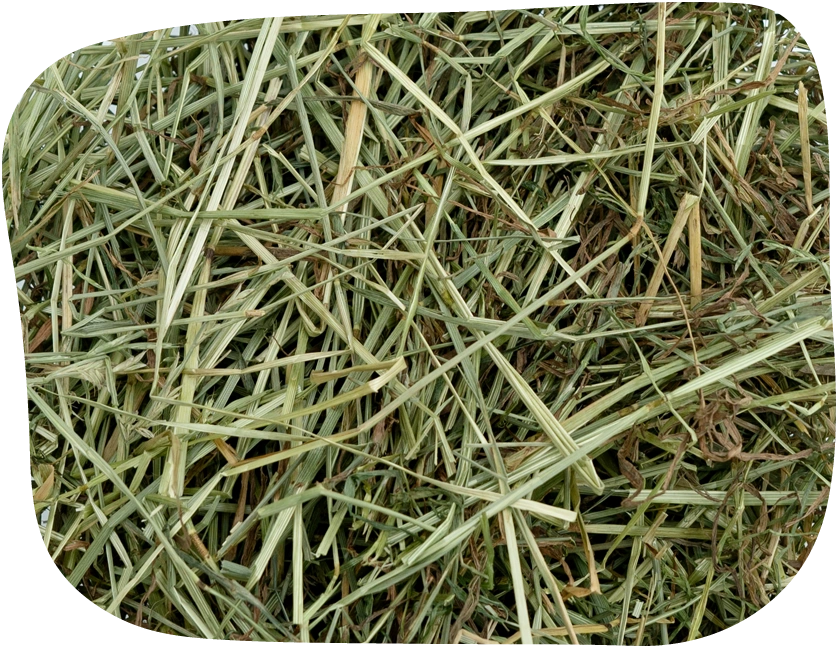
🌱 4️⃣ Ryegrass (Perennial or Italian)
Protein: 10–14%
Energy: 0.9–1.1 Mcal/lb
Digestibility: ⭐⭐⭐⭐
Notes: very palatable and nutrient-dense — horses love it. often used in lush pastures or mixed hays.
⚠️ can be too rich for easy keepers and high in sugars (risk for laminitis-prone or metabolic horses).
⸻

💎 5️⃣ Bluegrass (Kentucky Bluegrass)
Protein: 8–12%
Energy: 0.9–1.0 Mcal/lb
Digestibility: ⭐⭐⭐⭐
Notes: soft, fine, and highly digestible. usually seen in high-end pastures; rarely baled commercially because of low yield.
✅ great for broodmare or youngstock turnout forage if available in pasture form.
⸻

🌾 6️⃣ Teff Grass
Protein: 9–12%
Energy: 0.9–1.0 Mcal/lb
Digestibility: ⭐⭐⭐
Notes: warm-season annual with low NSC — safe for metabolic horses. palatable and clean when cut early.
✅ excellent filler hay for horses who need bulk without excess calories.
⸻

☀️ 7️⃣ Fescue (Tall Fescue)
Protein: 6–10%
Energy: 0.8–0.9 Mcal/lb
Digestibility: ⭐⭐
Notes: decent grass hay only if endophyte-free.
⚠️ Endophyte-infected fescue (common in the South) can cause abortion, prolonged gestation, thick placentas, and agalactia (no milk) in broodmares.
🚫 never feed to pregnant mares in the last 90 days unless tested and confirmed safe.
⸻

🌴 8️⃣ Bermuda (improved varieties like Tifton/Jiggs)
Protein: 8–11%
Energy: 0.8–0.9 Mcal/lb
Digestibility: ⭐⭐
Notes: acceptable for maintenance if grown and cut correctly; nutrient quality varies widely.
⸻

🪶 9️⃣ Coastal Bermuda
Protein: 4–8%
Energy: 0.7–0.8 Mcal/lb
Digestibility: ⭐
Notes: coarse, fibrous, low-nutrient hay often linked to impaction colic.
🚫 unsuitable for broodmares, foals, or high-performance horses.
⸻
🧠 Quick Reference Ranking: Nutritional Value + Suitability
RANK | HAY TYPE | PROTEIN % | ENERGY MCAL/LB | DIGESTIBILITY | BEST FOR | NOTES | |
🥇 1 | Alfalfa | 16-22 | 1.0-1.1 | ⭐⭐⭐⭐ | Broodmares, foals, performance | High protein/calcium | |
🥈 2 | Orchard | 10-14 | 0.9-1.0 | ⭐⭐⭐⭐ | Broodmares, sport horses | Leafy, nutrient-rich | |
🥉 3 | Timothy | 8-12 | 0.9–1.0 | ⭐⭐⭐⭐ | Maintenance, balance | Reliable and gentle | |
4 | Ryegrass | 10-14 | 0.9–1.1 | ⭐⭐⭐⭐ | Performance horses | Very palatable; high sugar | |
5 | Bluegrass | 8-12 | 0.9–1.0 | ⭐⭐⭐⭐ | Pastures, general forage | Fine and soft | |
6 | Teff | 9-12 | 0.9–1.0 | ⭐⭐⭐ | Metabolic/easy keepers | Low starch/sugar | |
7 | Fescue | 6-10 | 0.8–0.9 | ⭐⭐ | Non-breeding horses only | Risky for pregnant mares | |
8 | Bermuda (Tifton/Jiggs) | 8-11 | 0.8–0.9 | ⭐⭐ | Maintenance | Okay if high quality | |
9 | Coastal Bermuda | 4-8 | 0.7–0.8 | ⭐ | None (avoid for breeding) | Low nutrients, impaction risk |
HIGHEST TO LOWEST STARCH/SUGAR RANKING
🍬 HIGH-STARCH / HIGH-SUGAR HAYS
(these are richer, more “energy-dense,” great
for performance horses — but risky for metabolic ones)
🥇 Ryegrass
• NSC: 12–18% (can spike to 20%+ in lush growth)
• Why: cool-season grass that stores extra sugar in stems and leaves during sunny days + cool nights.
⚠️ Too rich for EMS, IR, or laminitis-prone horses.
🥈 Orchard Grass
• NSC: 10–16%
• Why: also a cool-season grass that naturally accumulates fructans (sugar polymers).
✅ great for performance or broodmares, but avoid for metabolic cases.
🥉 Timothy
• NSC: 8–14% (mid-range but variable)
• Why: less sugary than orchard but still can climb in spring growth.
⸻
🍞 MODERATE-STARCH HAYS
(these are fine for most horses; balanced energy and digestibility)
🌿 Bluegrass (Kentucky Bluegrass)
• NSC: 8–12%
• soft, palatable, and safe for most horses, but not “low-NSC.”
🌾 Bermuda (Tifton/Jiggs)
• NSC: 8–10%
• moderate sugar; usually safe, but can spike if stressed by drought or fertilized heavily.
⸻
🌱 LOW-STARCH / LOW-SUGAR HAYS
(best choices for metabolic, ulcer, or easy-keeper horses)
🍃 Teff Grass
• NSC: 5–10% (usually averages around 8%)
✅ extremely safe for IR/EMS horses; ideal for weight control or ulcer prevention.
⚠️ if cut too late, can drop in protein slightly.
🌾 Fescue (endophyte-free)
• NSC: 6–10%
✅ generally low sugar if not over-fertilized; safe for most horses except pregnant mares.
🍀 Alfalfa (legume)
• NSC: 5–9%
✅ legumes store energy as starch in the root, not in the leaves → naturally low sugar. excellent for ulcer-prone or insulin-resistant horses who still need calories.
🪶 Coastal Bermuda
• NSC: 6–9%
⚠️ not sugary, but still poor overall quality and digestibility — avoid for other reasons (colic risk, low nutrients).
⸻
🧠 Summary Table
HAY TYPE | NSC % | SUGAR/STARCH CATEGORY | NOTES | |
Ryegrass | 12-18 | 🔥 High | Very sweet; great for athletes, risky for metabolic horses | |
Orchardgrass | 10-16 | 🔥 High | Lush, sweet-smelling; moderate energy | |
Timothy | 8-14 | ⚖️ Moderate | Classic, balanced hay | |
Bluegrass | 8-12 | ⚖️ Moderate | Soft and palatable | |
Bermuda (Tifton/Jiggs) | 8-10 | ⚖️ Moderate | Fine if good quality | |
Fescue (endophyte-free) | 6-10 | 🍃 Low | Safe NSC, avoid infected types for broodmares | |
Teff | 5-10 | 🍃 Low | Excellent for IR/EMS horses | |
Alfalfa | 5-9 | 🍃 Low | Low sugar, high protein/calcium | |
Coastal Bermuda | 6-9 | 🍃 Low | Low sugar but poor nutrient profile |
⸻
💡 Quick takeaways:
• For metabolic / ulcer-prone horses → alfalfa, teff, or endophyte-free fescue are your best bets.
• For broodmares or performance horses → orchard, timothy, or ryegrass give great energy and nutrients.
• For maintenance → bluegrass, teff, or mixed orchard/timothy blends are balanced choices.
If you feed your broodmares like athletes, you give their foals the best chance for strong bones, solid metabolism, and longevity. In contrast, cutting corners now might cost you a foal’s health—or even a pregnancy.

Comments